

Canes of Karabakh & KIRk w Betelu
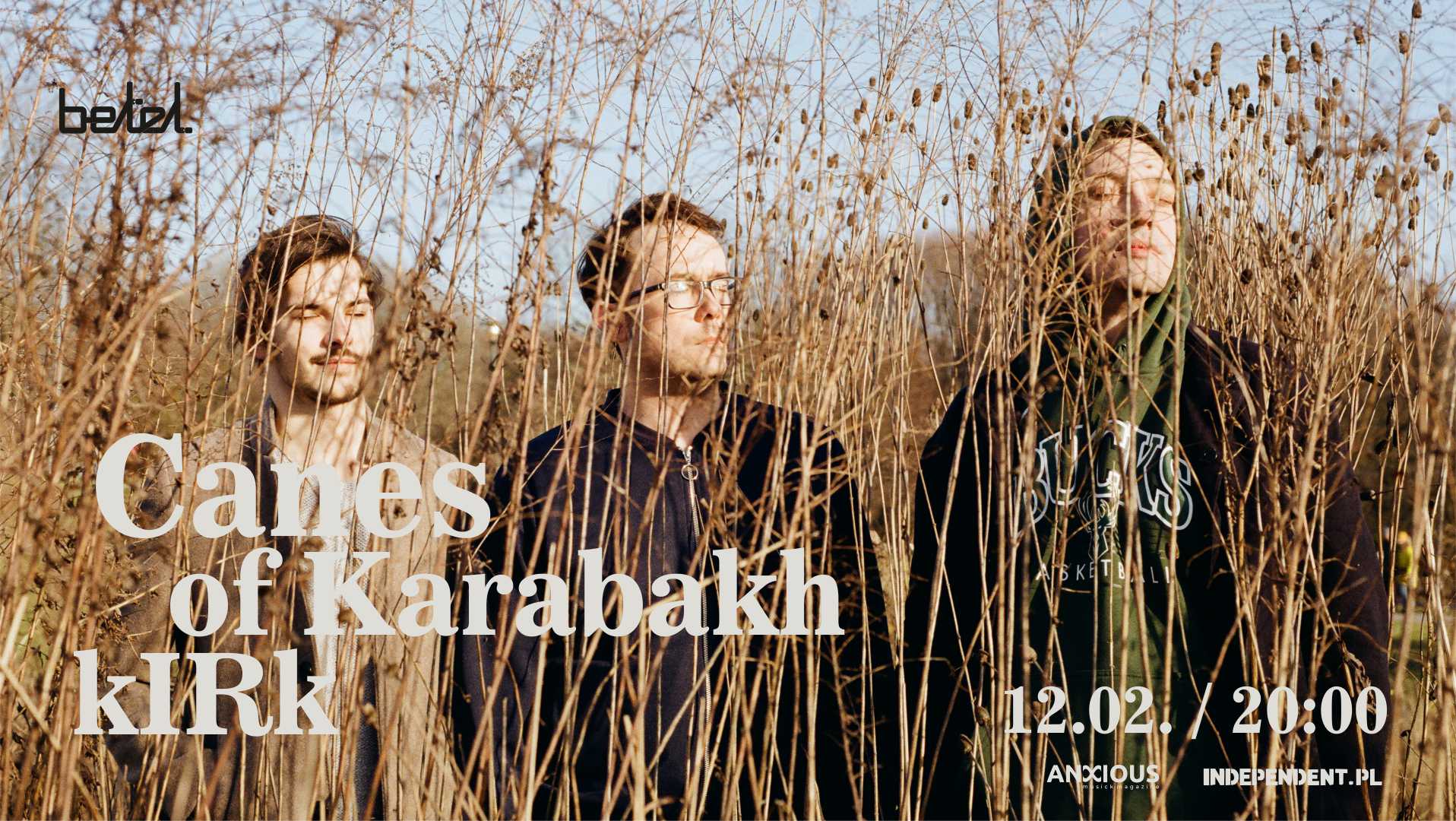 Canes of Karabakh & KIRk w Betelu
12 lutego 2026/ Kraków
Canes of Karabakh (avant folk/post rock) to projekt Stanisława Matysa (duduk), Olgierda Dokalskiego (flugelhorn, SFX) i Pawła Bartnika (elektronika). Jego źródłem jest bardzo konkretne doświadczenie: wojna o Górski Karabach, która wpłynęła nawet na dostępność stroików do duduka — instrumentu głęboko zakorzenionego w tamtejszym krajobrazie i tradycji.
Projekt stawia pytania o granice inspiracji i odpowiedzialność wobec kultury, z której się czerpie. Twórcy świadomie nie sięgają po tradycyjne melodie — skupiają się na samym brzmieniu: dialogu duduka i trąbki, ich wspólnym oddechu, napięciu i ciszy, otwartych przez subtelną elektronikę.
Canes of Karabakh zdobyli II nagrodę na Festiwalu Nowa Tradycja, co zaowocowało powstaniem płyty i serią koncertów promujących materiał.
Wieczór przybierze podwójną formułę koncertową:
najpierw Canes of Karabakh, a następnie set macierzystego składu muzyków — kIRk.
Dwa projekty, wspólne źródło wrażliwości, różne języki dźwięku.
Canes of Karabakh zdobyli II nagrodę na Festiwalu Nowa Tradycja, co zaowocowało powstaniem płyty i serią koncertów promujących materiał.
Wieczór przybierze podwójną formułę koncertową:
najpierw Canes of Karabakh, a następnie set macierzystego składu muzyków — kIRk.
Dwa projekty, wspólne źródło wrażliwości, różne języki dźwięku.
„Pierwsza płyta roku!” Jakub Knera / Nowe Idzie od Morza
„.. jest ona tak niesamowicie piękna, że będę do niej wracał regularnie zapewne przez okrągły rok.” Piotr Wójcik / Anxious Magazine
kIRk to zespół, który wyraźnie zaznaczył swoją obecność w polskiej muzyce niezależnej. Obecnie grupa składa się z trzech muzyków: Pawła Bartnika (elektronika), Olgierda Dokalskiego (trąbka), Stanisława Matysa (duduk). Progresywne myślenie i rewolucyjne podejście istniejącego od prawie 20 lat zespołu zostało docenione m.in. przez lidera Swans Michaela Girę, pioniera future-jazzowej trąbki Nilsa Petera Molvaera oraz matkę chrzestną nowych brzmień Mary Anne Hobbs. Do dziś kIRk wydał 5 albumów. Zespół grał w legendarnym berlińskim klubie Tresor, a także koncertował na scenach takich festiwali jak OFF, Opener, czy Kiev Music Days.
Linki:
FB https://www.facebook.com/kirkband
IG https://www.instagram.com/kirkband/
BC https://canesofkarabakh.bandcamp.com/album/canes-of-karabakh
SC https://soundcloud.com/kirkkirk
https://kirkband.com/
FB https://www.facebook.com/kirkband
IG https://www.instagram.com/kirkband/
BC https://canesofkarabakh.bandcamp.com/album/canes-of-karabakh
SC https://soundcloud.com/kirkkirk
https://kirkband.com/
Bilety: 50 zł / 60 zł (w dniu koncertu)
Do kupienia na Stage24, na barze w klubie lub na bramce w dniu koncertu.
Do kupienia na Stage24, na barze w klubie lub na bramce w dniu koncertu.
Fot. Zuzanna Głód
»EN«
Canes of Karabakh is a band formed by Stanisław Matys (duduk), Olgierd Dokalski
(flugelhorn, SFX), and Paweł Bartnik (electronics). The project’s founding stems from the duduk
player’s specific experience.
Canes of Karabakh is a band formed by Stanisław Matys (duduk), Olgierd Dokalski
(flugelhorn, SFX), and Paweł Bartnik (electronics). The project’s founding stems from the duduk
player’s specific experience.
…Matys has been learning to play the duduk from his Armenian friend, Narek. Narek regularly
supplies Matys with reeds for the instrument. The reeds, called gamish in Armenian, are made
from cane. The best material comes from Nagorno-Karabakh, where reeds are used to make
medium and hard reeds that have a beautiful, rich tone. One day, Matys finds out from Narek that
the price of reeds has doubled, from 25 to 50 euros. This is a result of Armenia’s defeat in the war
over Nagorno-Karabakh. This situation provokes a sense of discomfort in us, the Polish musicians
who have embraced the sound of the duduk. First, we are drawing from a tradition that is
endangered and deeply rooted in a specific place, its people, landscapes, and nature. Second, we
can afford these reeds, but many Armenians can no longer do so. With greater awareness, we see
how inaccessible, or seemingly accessible, the local culture is to us. This leads to reflections on the
extent to which (and whether at all) we have the right to draw from this Tradition without violating
or desecrating it.
supplies Matys with reeds for the instrument. The reeds, called gamish in Armenian, are made
from cane. The best material comes from Nagorno-Karabakh, where reeds are used to make
medium and hard reeds that have a beautiful, rich tone. One day, Matys finds out from Narek that
the price of reeds has doubled, from 25 to 50 euros. This is a result of Armenia’s defeat in the war
over Nagorno-Karabakh. This situation provokes a sense of discomfort in us, the Polish musicians
who have embraced the sound of the duduk. First, we are drawing from a tradition that is
endangered and deeply rooted in a specific place, its people, landscapes, and nature. Second, we
can afford these reeds, but many Armenians can no longer do so. With greater awareness, we see
how inaccessible, or seemingly accessible, the local culture is to us. This leads to reflections on the
extent to which (and whether at all) we have the right to draw from this Tradition without violating
or desecrating it.
We want Canes of Karabakh to be a modest, musical acknowledgment/drawing attention to the
fragility of the duduk—an instrument with a history spanning well over a thousand years. We
purposely do not use traditional melodies, feeling their great importance, which we cannot fully
honor. Instead, we focus on the sound of the duduk in combination with the sound of the trumpet
and flugelhorn. This sound is the focus of our musical endeavors.
fragility of the duduk—an instrument with a history spanning well over a thousand years. We
purposely do not use traditional melodies, feeling their great importance, which we cannot fully
honor. Instead, we focus on the sound of the duduk in combination with the sound of the trumpet
and flugelhorn. This sound is the focus of our musical endeavors.
Tickets: 50/60 PLN (Tickets available at the bar or Stage24
Data: 12 lutego 2026
Miejsce: Betel
FB: >>>