

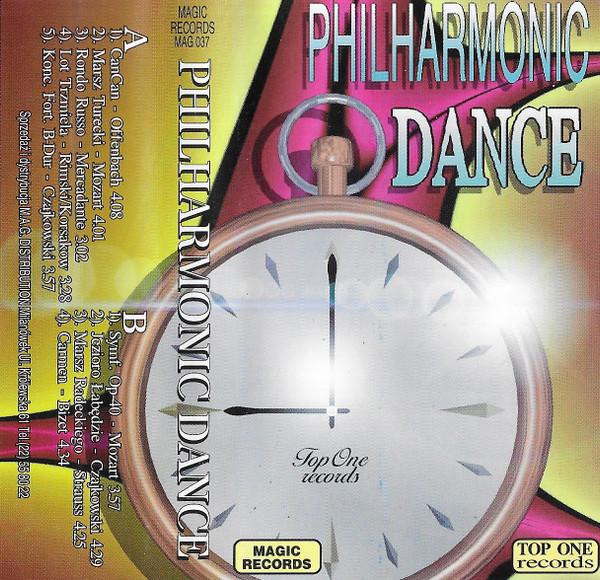
Cassette Phantasms
In Poland, during the 1990s (and the first few years of the new century), a common feature of the landscape were the ribbons of cassette tape found hanging from the branches of trees, tangled along the curbs, or wound around fences; the entrails of cassette-carcasses bereft of their sound content, or indeed their souls. As the post-tape-recorder world emerged, the scenery duly became crowded with the ghosts of a technology that seemed consigned to oblivion.
Yet this turned out to be brief exile rather than banishment, symptomatic of a slow decline rather than wholesale change. Compact cassettes were available for general sale in Europe well into the first decade of the 2000s: whilst major labels withdrew the pre-recorded variants from their catalogues circa-2003, the British retail chain Dixons sold blank tapes until 2007. The reason for this protracted “end of the affair” was not only the persistence of collectors (in 2004, I was still able to sell a 1000-item black metal cassette collection), but also the fact that the market for sound carriers lacked a genuinely adequate successor. The CD/CD-R, designed to replace the tape, remained somewhat exclusive: in spite of gradual reductions, the price of commercial CD albums (providing a huge margin for the labels) stayed at a level which forced buyers to carefully dose their new music. Likewise, the recordable variants were initially expensive when compared to cassettes, and despite CD’s early marketing claim of “perfect sound forever”, CD-Rs were notoriously temperamental and subject to physical degradation. The CD was also associated with a relative lack of portability: the delicate mechanism of the Discman (or its many imitators), and the hardware’s relatively high price meant that in contrast to portable cassette-players, their popularity was limited. The cassette was an inexpensive medium which no one had to handle with care, and which cooperated with all players (some portable CD players would accept CD-Rs, others wouldn’t). Cassettes may have decayed in stages as they were dragged over the playback head – a nightmare for the audiophile – but they were decidedly democratic.
„Listen to your present time tapes and you will begin to see who you are and what you are doing here mix yesterday in with today and hear tomorrow your future rising out of old recordings you are a programmed tape recorder set to record and play back”. William Burroughs, in the essay Invisible Generation, prophesied that the tape recorder would become a tool of revolution, a weapon in the war against the domination of the controlling linguistic “virus”. The insurrectionary potential of the tape deck is one of the factors that give it a distinct character. The CD, with its aura of sterile, somewhat-snobbish, middle-class audiophilia, and the fragile, tactile vinyl LP, requiring attention and a gentle touch, are altogether unsuitable for undertaking ideological warfare. Tape recorders are the terrorists’ weapon of choice in the film Decoder (1984, dir. Jurgen Muschalka), where Burroughs has a small, knowing, cameo role. In the real world, the cassette actually played a part in the conflicts of the second half of the twentieth century; a rather grim one at that. Tapes of propaganda speeches helped the ayatollahs attain power in Iran; in Rwanda, they were used to incite popular hatred; and in Serbia they served to channel nationalism via the extremely popular recordings of „guslari” (Balkan narrative singers). Conversely, the cassette could also function as a subversive, anti-establishment tool: photographs from the Polish Jarocin festival of the 1980s show ranks of fans poised with tape recorders, ready to document, and later disseminate the anti-authority messages of the contemporary punk bands. Tape-trading also had a political dimension: in the 80s, under the banner of „International Sound Communication”, a mail-exchange between both sides of the Iron Curtain was conducted via compact cassettes, sharing post-punk, industrial and experimental music.
Before the era of readily-available tools for digital sound recording, the cassette served both as a cheap, democratic medium, and the dominant carrier of underground culture. “Cassettes are currently the simplest and most artistically pure way of sharing sounds”, wrote Neil Strauss in the classic essay Cassette Mythos. Yet “underground” could be understood in radically different ways, because beyond the punk, experimental and metal circles, tapes were quickly exploited by the budding “disco polo” industry. These recordings, sold in the early 90s from street stalls (hence the largely forgotten alternative name “pavement music”), were created by genuine DIY means, copied en masse on twindeck recorders. What disco polo shared with avant-garde extremism was the common denominator of near-total absence in the mainstream media. This mark of underground credibility seems to be one of the keys to understanding the current, renewed enthusiasm for the compact cassette.
Today’s “boutique” microlabels, such as Opal Tapes, Sangoplasmo and Dunno (along with bands from the indie mainstream like The Flaming Lips and Animal Collective), deliberately ignore the ease of opportunity presented by the instant global distribution of digital files on the internet, opting instead to issue media that are increasingly difficult to play as the traditional home audio system and the once ubiquitous Walkman begin to perish, and which impose firm time limits and restrictions on the listener that digital natives (or digital immigrants, who’ve chosen to dispose of their clunky old hardware) are unused to. The relative awkwardness of the cassette may also discourage listeners: despite late-developing functions such as auto-reverse and blank-skip, there was never really a “smart” domestic tape recorder; tapes need turning over, or manually rewinding in order to listen to a particular song again. Imperfection in itself has become an extension of the underground tradition, the noble heritage of Xeroxed covers, lo-fi amateur (or quasi-amateur, an intentional aesthetic approach) recording, and the time-consuming rituals of tape-trading and mail art. The cassette format, a symbol of the 80s, can be read as a tribute to “better days”, in which the broadly-defined „alternative” sound was forged, but may also be an attempt to legitimize an artist’s own actions; an awkward format which requires engagement, serving as symbolic proof of taking your work seriously. Actions that look from afar like self-sabotage or wilful complication of distribution are actually deliberate strategies: uploading your demo to SoundCloud nowadays is the simplest first step towards building a global audience, but it also carries the risk of anonymity, of being overlooked, indistinguishable from the crowd. A physical presence, contrary to the digital morass, provides the music with a tangible casing, allows sound to merge with graphic design, and thus creates a desirable artefact.
Today’s re-releases coincide with the archaeology of the cassette medium: the tape-friendly zeitgeist is giving low-budget underground recordings new life. The seminal 5-cassette compilation Rising From The Red Sand, which gathered industrial/post-industrial pioneers of the early 80s, has recently been reissued as an expensive vinyl set. The Minimal Wave Records label has published a series of electronic-underground compilations, in LP and CD format, under the telling title of Minimal Wave Tapes. The cassette has become a nostalgic fetish, but on a slightly different basis to its predecessor, the vinyl record, because the tape once belonged to the world of DIY, the uncompromising hinterland, as well as to the real or imagined domain of childhood for musicians now coming of age. Hence, perhaps, the popularity of the image of the cassette alone, which has far surpassed current practical use of the medium. The presence of tapes, mostly anonymous, on clothing, gadgetry and items of home furnishing has reached an audience who, already armed with MP3 players and smartphones, are neither able, nor indeed interested in listening to the original media (I’m reminded here of the cassette-shaped MP3 player, as paradoxical as driving a horse-and-carriage-shaped car). The cassette, as an attractive, purely symbolic visual component, has joined the same iconosphere as the moustache or Ray-Ban sunglasses sported by the hip urbanites of the present-day.
The downsides of the medium; its characteristic hissing, the background click and crunch of moving parts (not to mention the terrifyingly familiar sound of chewed tape), were supposed – according to Andrew Adam Newman, who in 2008 published a long goodbye to the format in “The New York Times” – to leave cassettes valid only for lovers of audiobooks. It soon became apparent, however, that the relative warmth of tape sound, along with the characteristic woozy flutter, fitted perfectly with the new, nostalgia-tinged varieties of resurgent quasi-ambient and dream pop. Reminiscence; a space where holograms of the 1980s drift; an aesthetic as seen through an Instagram filter, which, giving the images a patina, immediately transform the fleeting present into the persistence of memory” – such things have defined a large area of electronic music in the last decade. The cassette also reached into the personal, hazy past of the recipient (often incidental, yet commonly understood – hence the popularity of „found” aesthetics among chillwave and hauntological artists: advertising, new age and educational recordings). Similarly, it served as a vehicle for what Arjun Appadurai termed “armchair nostalgia”: fabricated longing for something that is not actually lost. As a category, this can include both faux-Californian bliss for the ears of the listener from Radom, and the nostalgic-iconic dimension of audiocassettes experienced by a generation that grew up listening to music on an iPod. Some time ago, an internet meme circled: a kind of test for “those in the know” which juxtaposed images of a cassette and a pencil (for rewinding the tape by hand); stating that “Generation iPhone” (a condescending term for millennials) would not understand what connected the two items.
Nostalgia in the digital era finds its dark mirror in hauntology, where childhood memories are somewhat disconcerting. Simon Reynolds, in Retromania, called the cassette medium hauntological, because, as with the case of vinyl’s sonic imperfections which constantly remind us we are dealing with a recording (of, by implication, the past), magnetic tape is also susceptible to the effects of time. Pop culture often uses VHS tapes as a carrier of strangeness (epitomised by Japanese horror film The Ring), and one of the key works referred to by British hauntologists, especially artists from the Ghost Box label, is the 1972 TV play The Stone Tape. The title is a metaphor for a building that supposedly retained and played back, in spectral fashion, a recording of dramatic prior events; sound, rather than image, is the first signal of horror here.
Cassette hauntology does not require large financial outlay: every owner of a tape deck with a recording function has potential access to the esoteric world. “Take any text speed it up slow it down run it backwards inch it and you will hear words that were not in the original recording new words made by the machine”, as William Burroughs encouraged the Invisible Generation. “Machine speech” could be created by pressing the record button halfway down in order to overdub a new material layer onto the previous one. It also happened that when playing cassettes, if the head was not properly adjusted, one side of the recording bled through onto the other. This generated its own sense of haunting: between songs, and at the beginning and end, you could sometimes faintly hear sound in reverse. As my generation grew up surrounded by tapes, Polish news reported on the “backward masking” phenomenon largely dreamed up by American preachers. This was said to be the voice of Satan himself. For the youthful imagination, this was obviously an exciting (albeit trepidatious) encounter with the “dark side of the Force”. Simon Reynolds, however, notes that the hauntological dimension of a cassette is not due solely to interferences or faults, from which weirdness is leaking as if through a hole in reality, but also with the fact that we are dealing with cassette afterlife – with a dead medium that has been reanimated into semiconsciousness, more often than not in the symbolic dimension.
The most important feature of this hereafter lies in the altered status of the cassette, from strictly utilitarian, eminently disposable object (symbolised by the ribbon entrails decorating Polish yards), into a collectible artefact and/or work of art. While, just a few years ago, music stores were filled with boxes of tapes sentenced to death by the unprofitable decisions of distributors (always the same faces: Alisha’s Attic, Blackeyed Blonde, Mr. Ed Jumps The Gun), or of surplus erstwhile hits (DJ BoBo without fail, along with celebrities from the Polish Magic or Snake’s labels), today’s cassettes are deliberately released in limited runs, thereby initially low-cost, but quickly becoming objects of desire. But does the continued fascination concern more the cassette as physical medium, as concrete object, or rather the phantasms that it carries – the weight of its history, the “cassette mythos”?