

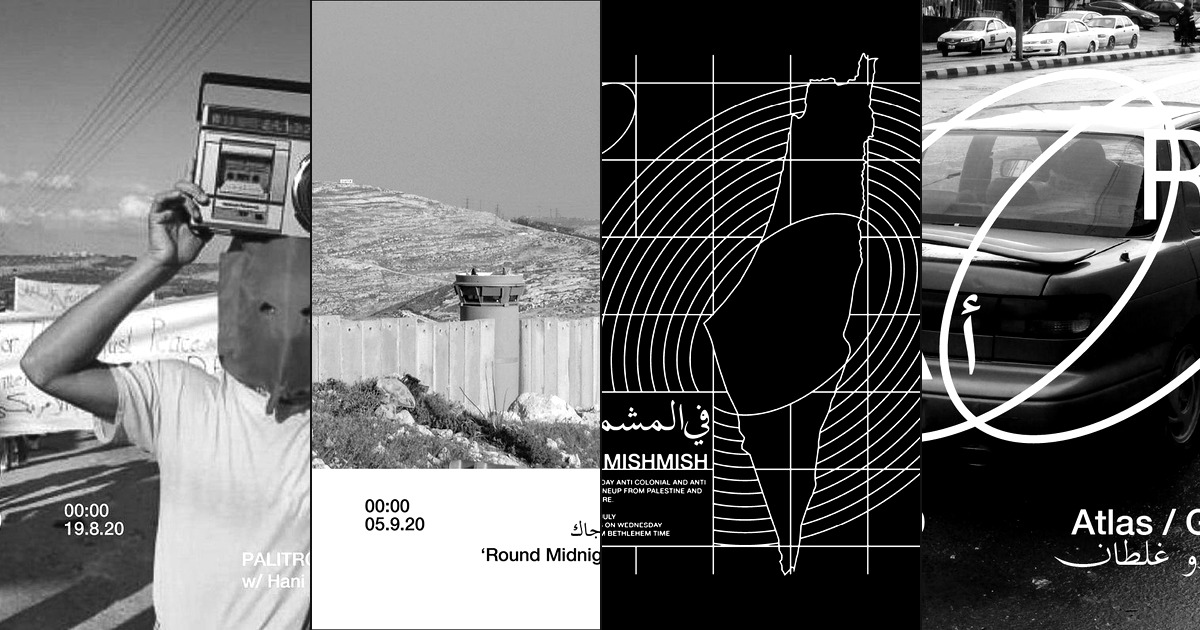
E-mails and personal connections – this is the beauty of Radio Alhara. Conversation with Saeed Abu-Jaber & Yazan Khalili
Saeed Abu-Jaber is a Palestinian graphic designer, illustrator, and co-founder of Studio Turbo, based in Amman. Yazan Khalili is a Palestinian visual artist, architect, and cultural activist, born in 1981, working in and out of Palestine and currently based in Amsterdam. Together, in the first days of the COVID-19 lockdown in 2020, they co-founded Radio Alhara — a communal online radio whose name means neighbourhood in Arabic, and which has since grown from a group chat among friends into a global network of sound, solidarity, and collective listening.
This conversation sits at the heart of what issue #46 Polityczność/The Political keeps returning to: what sound does in conditions of extremity. Mariam Menawi’s text on Gaza Sound Man documents sound under bombardment in Gaza as raw testimony; Radio Alhara builds the infrastructure that gives such testimony somewhere to travel. The Sonic Liberation Front, one of the station’s recurring programmes, is perhaps the most direct point of contact with Igor Wiśniewski’s writing on sonic communities of protest. Slavek Kwi/sonoent00 and Radio Alhara are doing related things from very different positions — building communities of listening: the first conceptually, the latter in daily radio practice. And Zygmunt Krauze, in his Children’s Requiem, takes the side of the victims through artistic form, while Radio Alhara through structure, through refusing to be funded or hierarchical. Through staying on air.
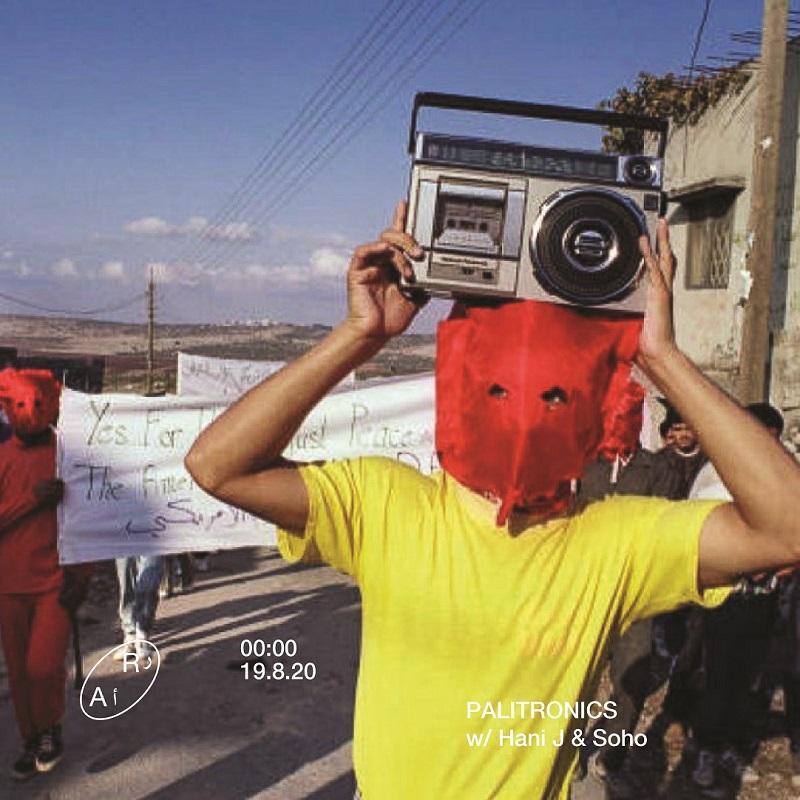
From the Radio Alhara archive
Natalia Piotrkowicz:
Thank you again for taking the time to speak with me. I have been following the radio for quite a long time and I really love what you do. I’ve also noticed that many people here are interested in independent broadcasting, so I thought it would be meaningful to introduce your project to them.
Saeed Abu-Jaber:
Yes, of course.
NP: How did the project first come together? How did you start?
SAJ:
It started when Elias Anastas and Yousef Anastas, brothers, architects and co-founders of Radio Alhara working with Wonder Cabinet in Bethlehem, called us and simply asked: “Do you want to start an online radio?” It was really that straightforward. This was in the first days of the COVID lockdown. At that time, a few other stations had already begun broadcasting using a platform that made it incredibly easy to launch an online radio station. You could basically start broadcasting within minutes. Most of us, like many others, used the radio streaming platform, Yamakan, in the beginning. There wasn’t much prior planning. I’ve always loved the radio format, and when the idea came up, it just felt natural. We already knew each other and had worked together before. We had also been collaborating with Elias for some time and had become good friends over the years. So in the beginning, it was simply something to fill our time during lockdown, without knowing how long any of this would last.
That’s really how it began. They called me, I sent them a logo five minutes later, and we were on air. At first, I was playing every day. Eventually, I reached a point where I felt almost depressed because I had played all the music I had. That’s when we started inviting friends, DJs, and other people we knew to contribute. And it worked. I often say it succeeded because it was the right time and the right place. Many of these people probably wouldn’t have had the time to record mixes or play live on the radio if it hadn’t been for lockdown. Suddenly, everyone had more time than they knew what to do with. The project began to grow organically. We would invite someone to play, and then they would invite someone else. It expanded through personal connections, almost like a social circle that kept widening.
Yazan Khalili:
Yeah, it was a very intuitive thing to begin with. The naming came also intuitively. Other radios at the time had names that indicated the idea of neighborhood, like Radio Hay and Radio Houma, sister community radio stations from the lockdown period . Hay’, ‘houma’, and ‘alhara’ are variations of the word ‘neighbourhood’ in different Arabic dialects in Tunisia and Lebanon. So we came up with the name Alhara, as the Palestinian way of calling the neighborhood. And it slowly began to develop as a neighborhood. It opened up to friends, to people, and to community members who could use this platform to broadcast.
There was also a chat box on the side, and still is, but back then it was much more active. That made the radio become a place to hang out. While you were listening to different content, you were also present with others. And the content was always diverse. Not only music. Some were live shows, but many were recordings taken from interviews, talks, lectures, films, whatever we could find. It became a place of hanging out, making friends, commenting on the content. The chat box, especially in the beginning, was a sign of being together during lockdown. We were all isolated in our homes, and this digital neighborhood confirmed our relationships and community connections.
It lived.
The fact that it continued six years later is based on other factors as well, which we can maybe talk about. Because the environment of radios we were connected to at the beginning slowly faded out, especially after COVID. But Radio Alhara, I think, managed to find its grounding within this growing field of digital radio.
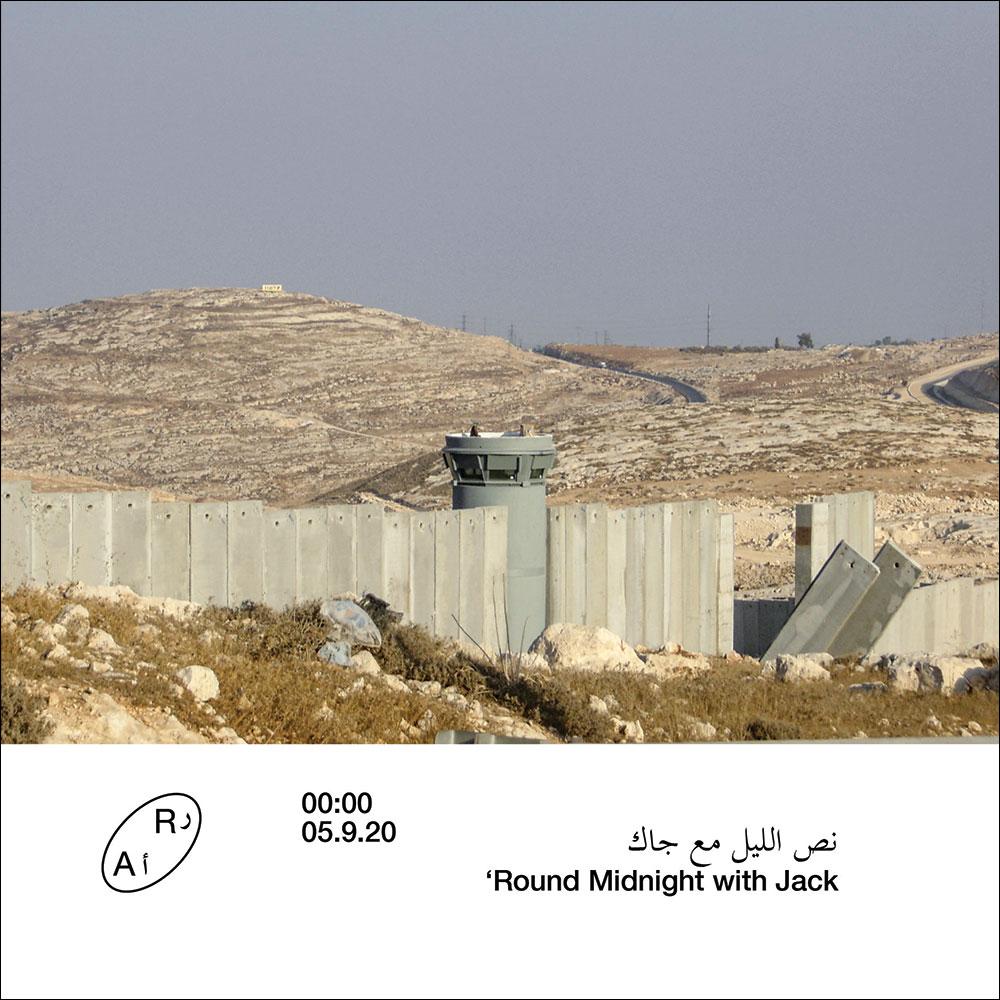
From the Radio Alhara archive
NP: Has the meaning of “neighbourhood” changed in its digital form? How do you understand or experience that shift?
SAJ:
I think it really became a neighborhood. It started smaller, mostly between us, Palestine, and Jordan, and then it kept growing. Now there are residents from all around the world who play on the radio. It’s a big neighborhood now.
YK:
Yes, it’s a big neighborhood. It might have lost a bit of the intuitiveness that was there at the beginning, but I think the longevity of the project turned it into a form of media that is missing from the internet in many ways. It creates a kind of closeness even without physical connection.
NP: I’d like to ask about some of your broadcasts, such as Learning Palestine, Sound of Places, and the Sonic Liberation Front. Could you tell me how these projects emerged?
SAJ:
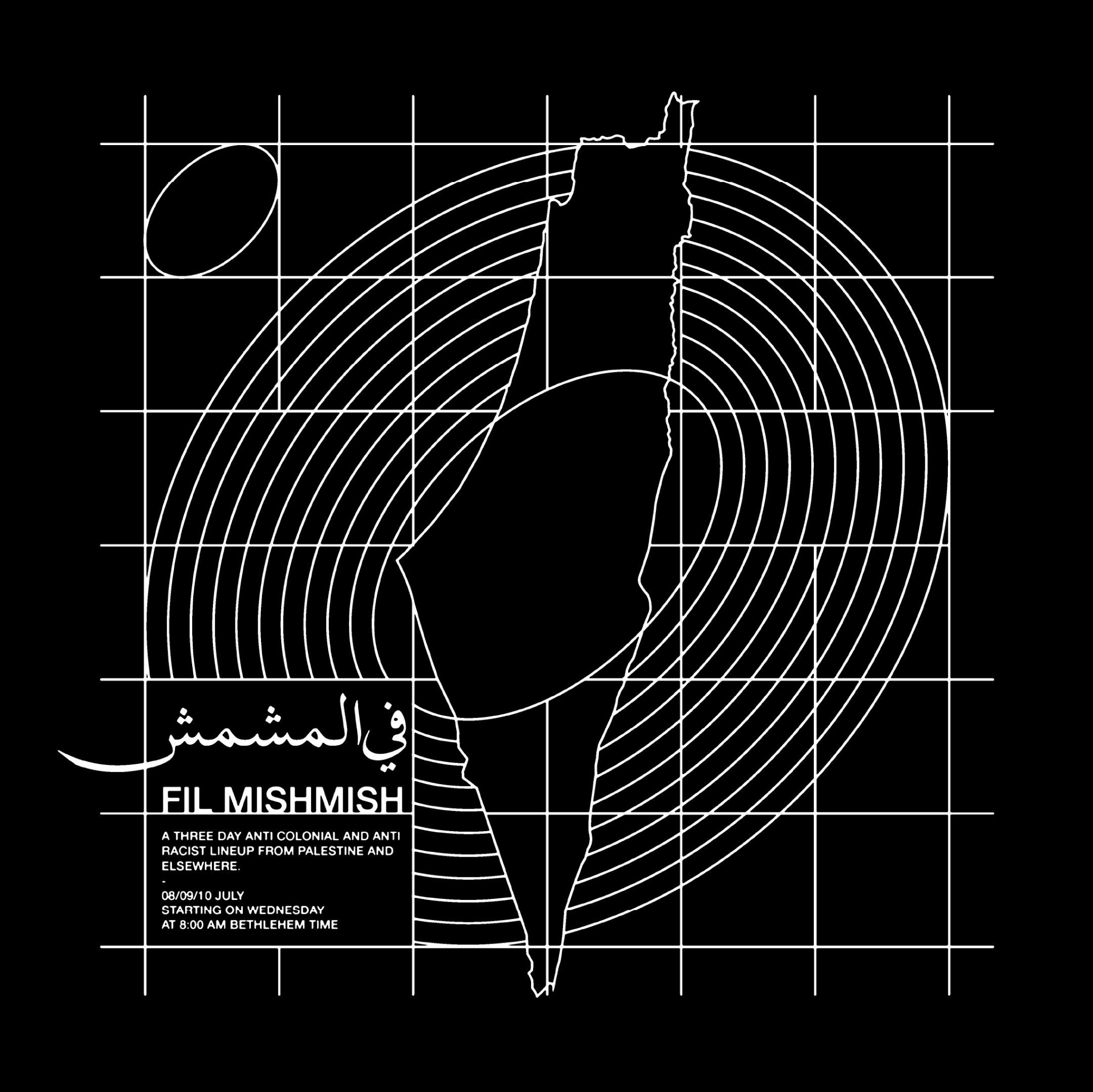
What we still love about the radio is that it’s very reactive. It’s a team of five or six people. It’s not a company. We don’t have a hierarchy. So many of the things that happened were reactions to what was happening in our direct, or sometimes indirect, environment. Even something like Fil Mishmish[1] in the beginning. We originally wanted to do a 24-hour lineup. Mo (Mohamed Choucair, co-founder of Radio Alhara in Beirut), our friend, said, give me two days and I can call more people. So it went from 24 hours to around 96 hours nonstop. At that time, some people told us we were taking a political approach. For us, it’s not so much a political approach as it is a reflection of reality. In the West, politics can sometimes feel like a hobby, like saying, “I want to go skiing” or “I want to get into politics.” Here, you live it. So everything we did was, in a way, reactive to what was happening around us.
The Sonic Liberation Front started with a sound artist who would go to places where events were unfolding, record sounds, come back home, edit them, and create a show based on what he recorded that day. At first it had a slightly different name, but then it became the Sonic Liberation Front. Over time, it developed into something larger. People from around the world began using it as a platform to speak about issues in their own countries and neighborhoods, whether in Colombia, South Africa, or elsewhere. It all operates in a spirit of solidarity.
From the Radio Alhara archive
YK:
Each of these projects has its own beginning, like Learning Palestine or Sound of Places, which is produced by Wonder Cabinet[2] in Bethlehem. But the framework of the radio is not only about creating or hosting sounds. It’s about creating networks of sound, connecting different groups and people around the world to produce a kind of global sound, what we call a unified sound. With the Sonic Liberation Front, what mattered was not only that the content was broadcast, but that it was shared across different radio stations around the world. Stations echoed each other, creating a network. This ability to connect and scale, to create a web of sounds, is an attempt to imagine a different kind of social media. What we often call communal media, something not based on algorithms or data mining, but on building social structures that support each other in times of upheaval. And this is not only Radio Alhara, but the network of radios it is part of. Being in Palestine, in a region shaped by conflict, gives us a certain position in this practice. But we are not alone. That is the strength of this emerging culture.
NP: You’re very interdisciplinary, working with graphic design, photography, and more. How did that develop? And how do other radios usually get in touch with you?
SAJ:
Emails and personal connections, really. That’s the beauty of it. Someone tells someone, who tells someone else. We might be discussing something in a WhatsApp group, and someone says, “I know these people, let me reach out.” It’s very natural, unforced. Then people begin to hear about us and contact us directly. We try to keep it as intuitive as possible. You send an email, we respond, we add you to the calendar. The calendar gives you a slot, you upload your content, we share it. It’s built step by step, using what’s available. And we stay involved. It’s not fully automated. We’re still managing the daily radio. That keeps it human, even as a digital structure.
NP: Does it happen that you meet in person sometimes?
SAJ:
Yes, sometimes. For me, the best part is meeting people you’ve been in contact with for years through email. You travel to Athens or Amsterdam or Milan and finally meet them. It’s always very special. Also, I think our position regarding Palestine filters people in a certain way. It’s rare that we meet someone who doesn’t understand what’s going on. That clarity is important. We’re not shying away from having a clear political position.
NP: Would you describe this network as a form of mutual support?
SAJ:
Yes. The format is very open, and we like to keep it that way. People can do anything with their slot. Talk, cook, stay silent. It’s all valid sonic content. At one point, during the beginning of the recent genocide, we stayed silent for two weeks. We had nothing to say. And it took time to find a position. Then we came back with Learning Palestine. That’s possible because we have no funding. We’re not dependent on anyone. That gives us the freedom to respond however we need to.
YK:
It’s not bound to anything except the community. We’re not trying to attract audiences. We don’t measure that. What matters are the people who want to share and produce. The internet can be isolating. Radio becomes a space where people come together instead of existing alone on separate platforms. You’re not an individual here. You’re part of a collective.
NP: In a culture dominated by images, radio feels particularly compelling. Why this medium?
SAJ:
We live in a visually saturated world. Audio has a kind of purity. There’s more imagination involved. You’re not being shown something. From the beginning, we didn’t focus on archiving. You either catch the show or you don’t. That immediacy matters.
YK:
Also, radio allows you to do other things at the same time. It doesn’t demand your full attention. Sound is lighter, easier to produce, easier to share. That makes it more livable. And there’s something about being part of a global landscape of radio. Platforms like Radio Garden[3] make that visible.
NP: What are your hopes for the future?
SAJ:
We don’t know. We have ideas, but we also have other jobs and commitments. It’s not really about growth. We always say we hope we have the ability to end it when it needs to end. We won’t drag it. As long as it’s enjoyable, relevant, and connected to the community, it continues. If not, it stops. We never knew what Radio Alhara was until we did it.
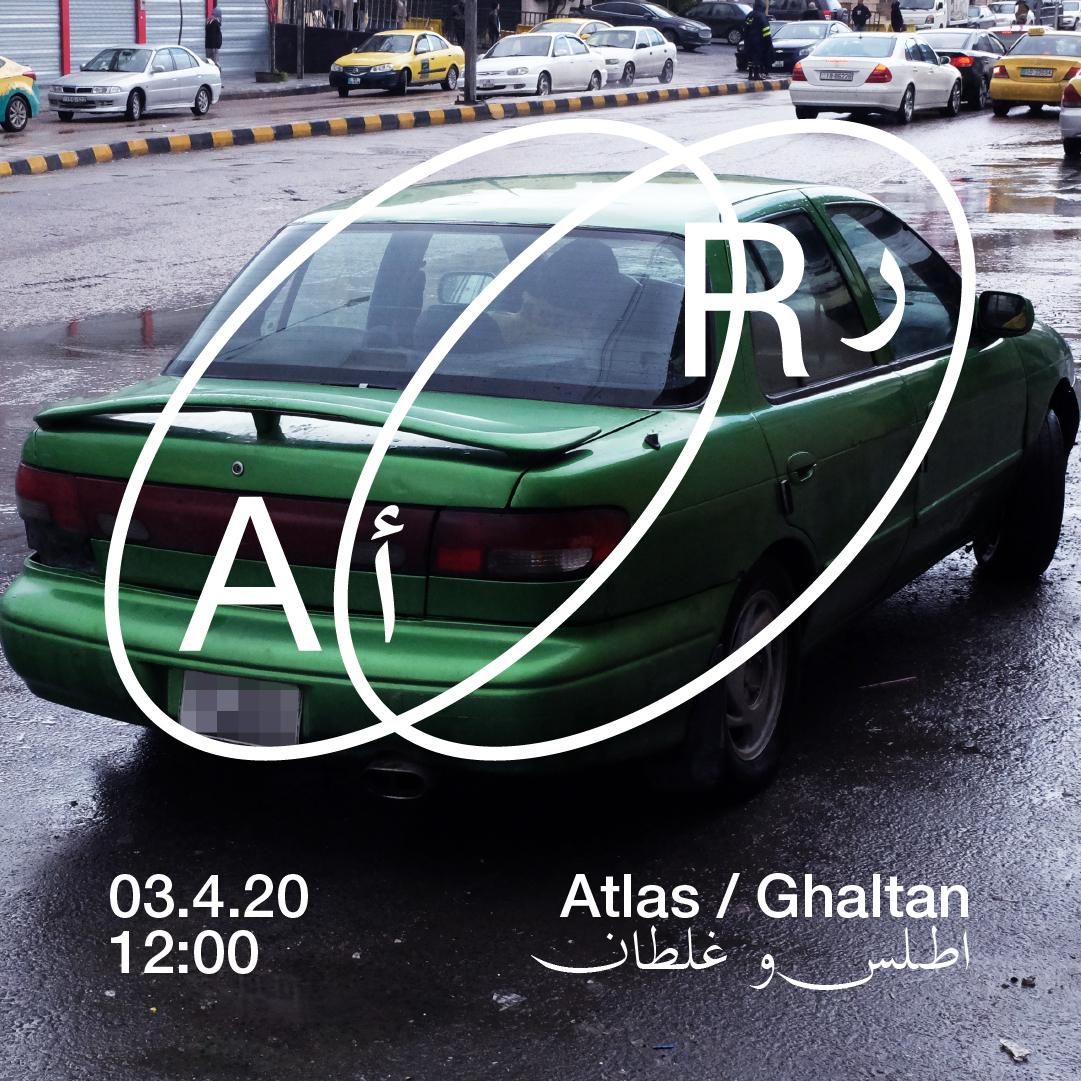
From the Radio Alhara archive
[1] Fil Mishmish (lit. “during apricot season,” an Arabic expression meaning “when pigs fly”) — a 72-hour broadcast organized by Radio Alhara in July 2020 in response to proposed annexation plans in the West Bank.
[2] Wonder Cabinet — an art space based in Bethlehem and home to Elias and Yousef Anastas; it functions as the physical base of Radio Alhara. It also runs Sound of Places, a residency focused on sound and radio practices.
[3] Radio Garden — an app that lets users explore radio stations worldwide via an interactive globe.